
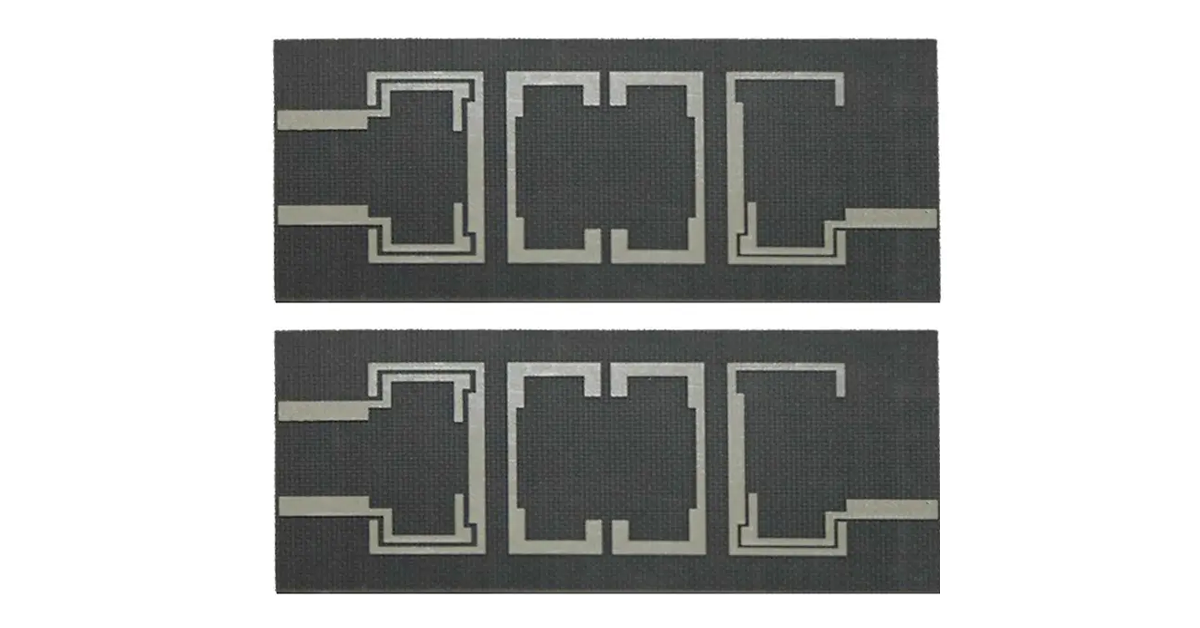
High-frequency PCBs (High-Frequency Printed Circuit Boards) are widely used in fields demanding high precision and stringent requirements, such as communications, radar, satellite navigation, and medical applications. In the production process of high-frequency PCBs, precise engraving and marking are crucial. Laser engraving and marking equipment serves as a vital tool in modern high-frequency PCB processing, offering high-precision and high-efficiency machining methods that ensure the quality and performance of each high-frequency PCB. By utilizing laser technology, this equipment performs detailed processing and identification on PCB surfaces. It is extensively applied in processes such as surface marking, cutting, etching, pad pattern engraving, and component identification on circuit boards.
This article will provide a detailed introduction to the role, working principles, applications, and importance of laser engraving and marking equipment in the high-frequency PCB production process.
1. Overview of Laser Engraving and Marking Equipment
Laser engraving and marking equipment operates by directing a laser beam onto the material surface, leveraging the high energy and precision characteristics of lasers to engrave or mark the PCB surface. Laser engraving is primarily used for etching patterns, marking pads, and performing other necessary machining on the PCB surface. Laser marking is typically used for identifying information such as board serial numbers, QR codes, logos, and production dates on circuit boards.
Compared to traditional mechanical machining methods, the advantages of laser engraving and marking equipment lie in its non-contact processing mode, elimination of the need for molds, and fast response time. Furthermore, laser technology allows for precise control over energy, focus spot size, and processing depth, ensuring high precision and quality for high-frequency PCBs.
2. Working Principles of Laser Engraving and Marking Equipment
The working principle of laser engraving and marking equipment is primarily based on the focusing effect of lasers and the principle of photothermal conversion. The specific process is as follows:
2.1 Laser Generation and Transmission
The laser device generates a high-energy laser beam via a laser generator, typically by converting electrical energy into light energy within the laser source to produce a laser of a specific wavelength. The laser beam is then transmitted to the focal area through an optical fiber or mirror system.
2.2 Laser Focusing and Action
The laser beam is focused onto a very small spot via mirrors or lenses. The focused laser beam achieves an extremely high energy density. When the laser beam irradiates the PCB surface, the material is heated to its melting or vaporization point through the photothermal effect, thereby achieving the engraving or marking operation.
- Engraving Process: The intense energy of the laser beam causes localized heating on the PCB surface, melting or vaporizing the surface material to etch the desired pattern or pad structure. Engraving depth and precision can be adjusted according to requirements.
- Marking Process: The laser beam energy is gentler, allowing it to alter the material’s color or surface structure through localized heating and chemical reactions, forming clear marking information such as characters, numbers, barcodes, and QR codes.
2.3 Computer Control
Laser engraving and marking equipment is typically controlled by a Computer Numerical Control (CNC) system. Based on input design files, the equipment can precisely control laser path, focus, power, speed, and other parameters, ensuring accuracy at each processing point. This enables laser equipment to complete various engraving and marking tasks based on complex design patterns.
3. Applications of Laser Engraving and Marking Equipment in High-Frequency PCB Production
Laser engraving and marking equipment finds widespread application in the high-frequency PCB production process, primarily reflected in the following aspects:
3.1 Pad Pattern Engraving
High-frequency PCB designs often require very precise pad shapes and dimensions. Laser engraving equipment can precisely engrave pad patterns on the PCB surface, ensuring the size, position, and shape of each pad fully comply with design requirements. Laser engraving is suitable not only for creating surface pads but also for producing micro-holes and vias, avoiding potential errors from traditional mechanical machining methods.
3.2 Circuit Board Identification and Barcode Generation
During the production of high-frequency PCBs, each circuit board typically requires identification, such as production dates, batch numbers, and serial numbers. Laser marking equipment can accurately mark production information, QR codes, barcodes, logos, etc., on the PCB surface. Compared to traditional printing methods, laser marking offers higher precision, durability, traceability, and will not fade or peel due to environmental changes.
3.3 Component Position Marking
In high-frequency PCB production, precise component placement is critical. Laser marking equipment can mark component positions, polarity, and connection direction on the PCB, providing guidance for subsequent component placement and soldering. Laser marking makes component identification and operation during the production process more efficient.
3.4 Signal Trace and Ground Layer Engraving
The design of signal transmission traces and ground layers in high-frequency PCBs significantly impacts electrical performance and signal integrity. Laser engraving equipment can precisely engrave signal traces and ground layers on high-frequency PCBs, ensuring each trace meets design requirements and guaranteeing stable signal transmission.
3.5 Micro-Structure Processing and Fine Cutting
High-frequency PCBs often involve designs with micro-structures, such as fine circuit lines and tiny connection holes. Laser engraving equipment enables fine cutting and processing, making it suitable for producing circuit boards with micro-dimensions. Due to the small focus spot and high precision of the laser beam, it can accomplish fine machining tasks that are difficult for traditional machining methods.
4. Advantages of Laser Engraving and Marking Equipment
4.1 High Precision and Resolution
Laser engraving and marking equipment can provide micron-level precision, making it particularly suitable for complex pattern engraving and micro-component identification on high-frequency PCBs. Laser technology allows precise control over engraving depth and marking position, ensuring the high precision and quality of high-frequency PCBs.
4.2 Non-Contact Processing
Unlike traditional mechanical machining methods, laser engraving and marking are non-contact processes, causing no physical wear or deformation to the PCB material. This contactless processing method avoids structural damage or material detachment caused by mechanical friction.
4.3 High Efficiency and Rapid Response
Laser engraving and marking equipment can quickly complete complex engraving and marking tasks. Especially in mass production, laser equipment can significantly improve production efficiency and shorten delivery cycles. Due to its highly automated nature, the equipment can rapidly respond to different design requirements and flexibly adjust processing parameters.
4.4 Pollution-Free and Environmentally Friendly
The laser engraving and marking process does not involve chemical solvents or other pollutants, making it more environmentally friendly. It avoids the environmental pollution associated with traditional etching and coating methods, aligning with modern environmental requirements in production.
4.5 Flexibility and Versatility
Laser engraving and marking equipment is highly flexible and can adapt to the processing needs of different materials and shapes. Whether for flexible PCBs, rigid PCBs, or high-frequency PCBs, laser equipment can efficiently accomplish precision machining tasks. Furthermore, laser engraving equipment can simultaneously perform multiple functions such as pattern engraving, cutting, and marking, enhancing the flexibility and versatility of the production line.
5. Application Cases of Laser Engraving and Marking Equipment in High-Frequency PCB Factories
In many high-frequency PCB factories, laser engraving and marking equipment has become a key production tool. For example, when manufacturing high-frequency PCBs for 5G communications, laser engraving equipment can precisely engrave minute signal transmission traces, while laser marking equipment can accurately mark production information and test data on each circuit board, facilitating subsequent traceability and management. Additionally, laser equipment excels in engraving micro-solder joints and cutting fine lines, ensuring the electrical performance and structural stability of high-frequency PCBs.
Conclusion
Laser engraving and marking equipment plays a significant role in high-frequency PCB production, especially in precision machining, component identification, and signal trace engraving, offering very high precision and efficiency. Through this advanced processing method, high-frequency PCB manufacturers can complete prototype design and mass production more rapidly, ensuring product high quality and high performance. As the demand for high-frequency PCBs continues to grow, laser engraving and marking equipment will continue to play an important role in PCB factories, driving high-frequency PCB manufacturing toward even higher precision and efficiency.