
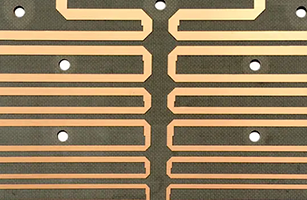
PTFE (polytetrafluoroethylene) is widely used in high-frequency PCB manufacturing for its superior dielectric properties and low-loss performance. However, PTFE substrates often suffer from rough drilled hole walls, compromising metallization reliability, causing poor plating adhesion and increased signal loss. This article details five proven methods to enhance PTFE hole metallization quality.
1. Optimize Drilling Parameters to Minimize Stress
PTFE’s soft texture and high CTE make it prone to tearing/burring if drilled improperly. Key fixes:
- Reduce feed rate: Lower mechanical impact for cleaner holes.
- Increase spindle speed: Higher RPM reduces friction, smoothing walls.
- Use sharp drill bits: High-hardness bits + regular wear checks prevent defects.
2. Switch to Laser Drilling (UV/CO₂)
Laser outperforms mechanical drilling for PTFE:
- Non-contact processing: Eliminates stress-induced roughness.
- Precision control: Tunable energy/pulse width ensures smooth microvias.
- HDI compatibility: Ideal for high-density boards with <100µm holes.
3. Post-Drill Chemical Etching
Remove debris and improve uniformity with:
- Sodium naphthalene: Mild PTFE etching (timed to avoid over-etch).
- Plasma treatment: Activates surfaces for stronger metal adhesion.
4. Upgrade Pre-Metallization Treatment
Counteract PTFE’s low surface energy:
- Desmear: Chemically remove resin/glass fiber residues.
- Surface roughening: Sandblasting/chemical etching boosts bonding.
- Activation: Palladium catalysts ensure uniform copper deposition.
5. Optimize Electroplating Techniques
Enhance copper deposition quality:
- Pulse plating: Achieves 30% better thickness uniformity vs. DC plating.
- Additive control: Levelers/brighteners prevent voids and pits.
- Step-current plating: Gradual current increase reduces internal stress.
Conclusion
Rough PTFE hole walls critically impact signal integrity and product lifespan. Implementing these methods—drilling optimization, laser technology, chemical etching, robust pretreatment, and advanced plating—ensures reliable high-frequency PCB performance. Manufacturers should tailor solutions to material specs and production capabilities for optimal results.