

Advantages of Rogers RO3000 Calendered Copper Laminates:
Excellent Electrical Performance:
Low Insertion Loss: The smooth rolled copper layer, combined with the RO3000 PTFE ceramic resin material—which features extremely low dielectric loss—achieves first-class insertion loss among high-frequency circuit materials. This makes it an ideal choice for the stringent loss requirements of millimeter-wave circuit designs, such as automotive radar sensors and point-to-point microwave backhaul communication systems.
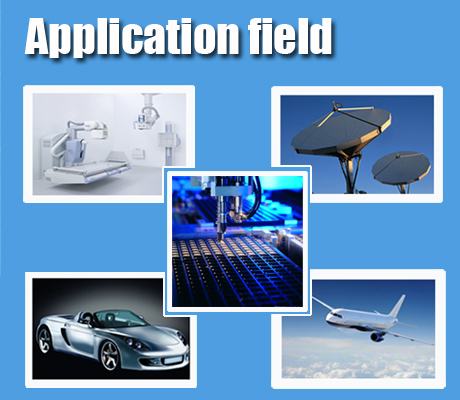
Wide Range of Dielectric Constants: The RO3000 series laminates offer a wide range of dielectric constant (Dk) values, spanning from 3.0 to 10.2. All laminates with different dielectric constants provide identical mechanical properties. This allows designers to select the most suitable Dk laminate for each individual layer when designing multilayer circuits, enabling the development of diverse multilayer designs without causing distortion or compromising system reliability.
Stable Dielectric Constant: The dielectric constant remains stable across a wide range of ambient temperatures, and its variation with temperature is highly consistent, ensuring consistent circuit performance under varying environmental conditions. For example, materials such as RO3003 and RO3035 exhibit excellent stability in their dielectric constants when exposed to temperature changes.
Excellent Mechanical Properties:
Good Dimensional Stability: The thermal expansion coefficients of RO3000 material in the X and Y directions are comparable to those of copper (approximately 17 ppm/°C). The typical etching shrinkage (post-etch baking) of the material is less than 0.5 mils/inch, demonstrating excellent dimensional stability; The CTE in the Z direction is 24–25 ppm/°C, ensuring the reliability of plated-through-hole systems even under severe temperature conditions.
Multiple laminate options available: Both glass-fiber-reinforced and non-glass-fiber-reinforced laminate options are available. The non-glass-fiber-reinforced RO3000 series laminates offer more unique isotropic electrical properties compared to equivalent competitive materials; Glass-fiber-reinforced models (such as the RO3200 series) improve handling and alignment control through the reinforcement provided by the glass fabric.
Highly Targeted Applications:
Suitable for millimeter-wave circuit design: An ideal choice for the stringent loss specifications required in millimeter-wave circuit design, where circuit consistency is critical. This material meets the strict circuit performance requirements of applications such as automotive radar sensors and point-to-point microwave backhaul communication systems.
Meets specific industry needs: Optimized for next-generation automotive radar applications; for example, the RO3003 laminate with a dielectric constant of 3.0 is a reliable choice for 77 GHz automotive radar sensors. It is now available in rolled copper foil versions ranging from 1/2 oz to 0.040” thick, which can significantly reduce insertion loss.

Disadvantages of Rogers RO3000 rolled copper laminates:
Difficult to process:
Complex drilling process: The RO3000 series is a pure PTFE (polytetrafluoroethylene) ceramic-filled composite material without a glass fiber skeleton for support. The substrate is relatively soft, has a smooth surface, and is highly adhesive. Applying standard FR-4 drilling processes directly will likely result in batch scrap. During processing, specialized carbide drill bits must be used, with the spindle speed reduced to 20,000–25,000 rpm and the feed rate limited to 1–1.5 m/min. The entire process requires low-speed, slow-feed operation, along with specialized coolant to minimize tool adhesion. During subsequent hole metallization, the surface of pure PTFE substrate is highly inert, making it impossible for standard electroless copper plating to adhere. Additional sodium naphthalene etching or plasma activation treatment is required to break the surface inertness and ensure a secure copper plating layer. This not only extends the processing time but also directly increases manufacturing costs.
Etching process is difficult to control: PTFE substrates are highly resistant to chemical corrosion, making it impossible to precisely control the etching rate with standard acidic etching solutions. This often leads to excessive side etching and jagged circuit patterns, significantly increasing the difficulty of processing fine lines (below 0.15 mm). Furthermore, PTFE substrates have a unique coefficient of thermal expansion; even slight temperature fluctuations during etching can cause micro-deformation of the substrate, resulting in circuit misalignment and failure of impedance matching. To achieve high-quality etching of RO3000, specialized etching solutions must be used, with constant temperature control throughout the process, and laser etching must be employed as an auxiliary method to ensure circuit precision. This results in a longer etching process and higher costs. For small-batch prototyping, the scrap rate typically ranges from 15% to 20%, which is significantly higher than that of other material series.
Stringent lamination process: Laminating PTFE substrates is extremely demanding. Lamination temperature must be raised to 220–240°C, pressure must be controlled at 25–30 kg/cm², the heating rate must be slow and uniform, and the holding time must be extended to 120–150 minutes. Even slight deviations can cause issues such as substrate slippage, delamination, and bubbles. Furthermore, since PTFE substrates lack glass fiber reinforcement, dimensional shifts are prone to occur during multi-layer lamination. This necessitates the use of custom positioning molds, and post-lamination, the material must undergo isothermal curing to relieve internal stresses. The entire lamination process not only demands high-specification equipment but also involves extremely difficult process debugging. Only factories with professional high-frequency board processing certifications can undertake this work; ordinary PCB factories are simply unable to handle it. This directly limits its mass production scale, making it suitable only for high-end, small-batch customization scenarios.
Higher Costs:
Material Costs: Due to its superior performance and unique material composition, the RO3000 calendered copper laminate itself is relatively expensive.
Processing Costs: As mentioned above, the high processing difficulty means that processes such as drilling, etching, and lamination require specialized equipment, processes, and materials, which increase processing costs. For small-batch prototyping, the combined cost of drilling and activation per board can even exceed the total processing cost of some other materials.