
RO3003 Bond vs RO4450: Differences, Lamination Process, and Best Bonding Material for Rogers RO3003 PCB
ro3003-bond-vs-ro4450
Meta Description
Learn why Rogers RO3003 PCB cannot be directly laminated and compare RO3003 Bond with RO4450. Discover differences in material type, lamination process, dielectric properties, manufacturing cost, and the best applications for high-frequency and mmWave PCB designs.
RO3003 Bond vs RO4450: Why Rogers RO3003 Cannot Be Directly Laminated
Designing multilayer RF and microwave PCBs involves more than simply choosing a low-loss substrate. One of the most common questions engineers ask is:
Can Rogers RO3003 laminates be directly pressed together without a bonding material?
The answer is no.
Unlike FR-4 or hydrocarbon ceramic laminates, RO3003™ is a ceramic-filled PTFE composite. Because of its material characteristics, multilayer structures require a dedicated bonding film to achieve reliable layer adhesion.
Another frequently asked question is whether RO3003 Bond and RO4450 can be used interchangeably. Although both are Rogers bonding materials, they belong to completely different material systems and serve different manufacturing purposes.
This article explains why RO3003 requires a bonding layer, compares RO3003 Bond with RO4450, and helps PCB designers choose the right solution for their RF applications.
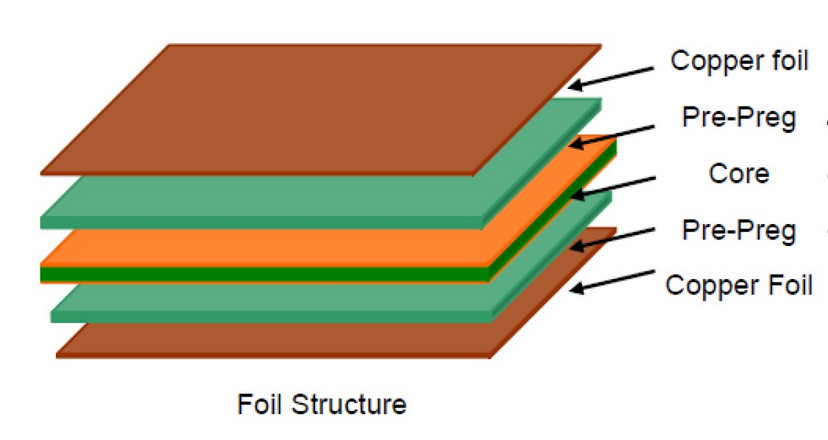
Why RO3003 Cannot Be Directly Laminated
RO3003™ belongs to the Rogers RO3000® family of ceramic-filled PTFE laminates. PTFE offers extremely low dielectric loss and excellent electrical stability, making it ideal for microwave and millimeter-wave circuits.
However, PTFE behaves very differently from conventional epoxy materials.
Unlike thermosetting resin systems, PTFE does not chemically crosslink during lamination. Heating alone cannot permanently bond two RO3003 cores together. As a result, direct lamination of RO3003 cores cannot produce a mechanically reliable multilayer PCB.
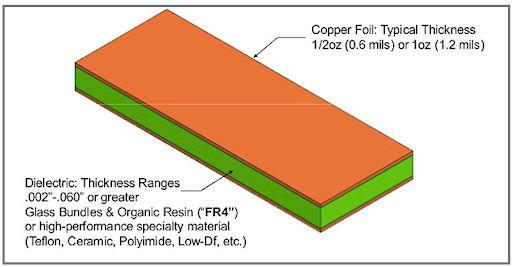
Instead, a dedicated bondply (bonding film) must be inserted between the dielectric layers during the lamination process. The bondply melts and flows under controlled temperature and pressure, creating a strong and reliable interface between adjacent RO3003 laminates.
Without this bonding layer, multilayer boards are prone to:
Poor interlayer adhesion
Delamination during thermal cycling
Reduced mechanical reliability
Manufacturing yield problems
For this reason, Rogers recommends using compatible bonding materials specifically designed for PTFE laminates.
For more information about Rogers high-frequency materials, refer to the Rogers Corporation material guide:
https://rogerscorp.com/advanced-electronics-solutions
.
 .
.RO3003 Bond vs RO4450: What’s the Difference?
Although both products function as bonding materials, RO3003 Bond and RO4450 series bondply are built on entirely different resin technologies.
Their differences influence electrical performance, processing conditions, manufacturing cost, and suitable applications.
| Property | RO3003 Bond (RO3001 Bondply) | RO4450 Series (RO4450B/F/T) |
|---|---|---|
| Material System | Thermoplastic PTFE Bondply | Thermoset Hydrocarbon Resin |
| Compatible Materials | RO3000 Series PTFE Laminates | RO4000 Series and FR-4 Hybrid Designs |
| Typical Dielectric Constant (10 GHz) | Approximately 3.0 | Approximately 3.3–3.5 |
| Typical Dissipation Factor (10 GHz) | Approximately 0.0012 | Approximately 0.004 |
| Lamination Temperature | Higher temperature and pressure | Standard FR-4 lamination (~177°C) |
| Processing Difficulty | Higher | Lower |
| Manufacturing Cost | Higher | Lower |
| Electrical Performance | Excellent | Very Good |
| Typical Applications | Millimeter-wave, aerospace, radar | RF communications, automotive radar, 5G infrastructure |
Thermoplastic vs Thermoset Materials
The biggest difference lies in the resin chemistry.
RO3003 Bond: Thermoplastic
RO3003 Bond is a thermoplastic bonding material.
During lamination, it softens and flows between dielectric layers under elevated temperature and pressure. Once cooled, it solidifies to create the bonding interface.
Because PTFE has limited natural adhesion, the manufacturing process requires:
Higher lamination temperatures
Higher pressure
Tighter process control
More demanding equipment
The benefit is exceptionally low dielectric loss and excellent electrical consistency at microwave and millimeter-wave frequencies.
This makes RO3003 Bond the preferred option for applications above 24 GHz, including automotive radar, satellite communications, phased-array antennas, and aerospace electronics.
RO4450 Series: Thermosetting Resin
RO4450 belongs to the Rogers RO4000® bonding family.
Unlike PTFE bondply, it is a thermosetting resin. During lamination, the resin chemically cures to form a permanent crosslinked structure.
Its advantages include:
Standard multilayer PCB processing
Compatibility with conventional FR-4 manufacturing lines
Higher production yield
Lower manufacturing cost
Faster production cycles
For many RF products operating below millimeter-wave frequencies, RO4450 provides an excellent balance between electrical performance and manufacturability.
Which Bonding Material Should You Choose?
The decision depends largely on your application’s electrical performance requirements and production budget.
Choose RO3003 Bond if:
Ultra-low insertion loss is the highest priority.
Your design operates at millimeter-wave frequencies (24 GHz, 28 GHz, 60 GHz, 77 GHz, or higher).
You are building an all-PTFE multilayer structure.
Maximum dielectric consistency is required.
Your manufacturing partner has extensive experience processing PTFE laminates.
Typical applications include:
77 GHz automotive radar
Satellite payloads
Aerospace RF systems
Millimeter-wave antennas
High-end microwave equipment
Choose RO4450 if:
You need lower manufacturing cost.
Your design combines RO4000 laminates with FR-4.
Production efficiency is important.
Conventional multilayer PCB fabrication is preferred.
Slightly higher dielectric loss is acceptable.
Typical applications include:
5G base stations
RF power amplifiers
Wireless communication equipment
Industrial RF electronics
Commercial microwave devices
Final Thoughts
RO3003 laminates cannot be directly laminated together because PTFE does not chemically bond during the multilayer pressing process. A compatible bonding film is essential to achieve reliable multilayer construction.
While both RO3003 Bond and RO4450 serve as bonding materials, they are designed for different material systems.
If your priority is achieving the lowest possible insertion loss in demanding millimeter-wave applications, RO3003 Bond remains the preferred solution despite its more complex processing requirements.
If your goal is to simplify fabrication, improve production efficiency, and reduce overall manufacturing costs, RO4450 offers an excellent compromise while maintaining strong RF performance.
Selecting the correct bonding material at the beginning of your PCB design process can significantly improve product reliability, manufacturing yield, and long-term electrical performance.
Recommended External Resources
Rogers Corporation – High Frequency Laminates
https://rogerscorp.com/advanced-electronics-solutionsRogers RO3003™ High Frequency Laminate Data Sheet
https://rogerscorp.com/advanced-electronics-solutions/ro3000-series-laminatesIPC – PCB Design Standards and Technical Resources
https://www.ipc.org