
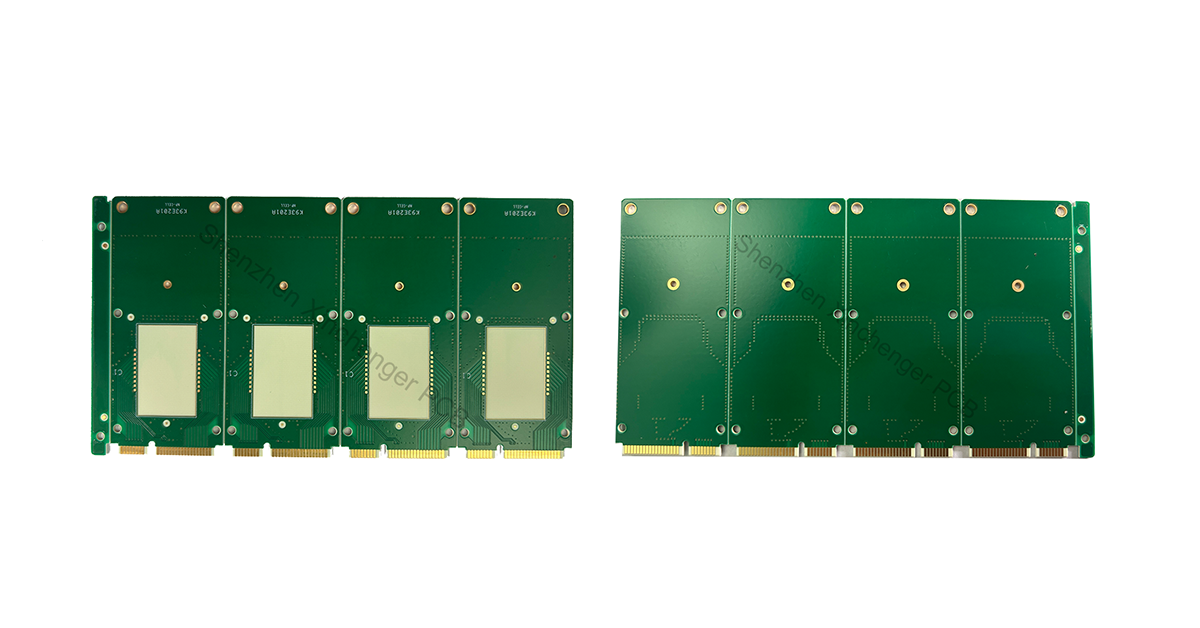
In modern electronic product design, significant differences exist between the manufacturing processes of high-frequency circuit boards and standard circuit boards due to their distinct application scenarios and performance requirements. Understanding these differences is crucial for selecting the appropriate circuit board solution. This article provides an in-depth analysis of the key distinctions in their manufacturing processes.
Fundamental Differences in Material Selection
High-frequency circuit boards typically utilize specialized high-frequency substrates, such as professional high-frequency materials from brands like Rogers or Taconic. These materials feature stable dielectric constants and low dissipation factors, ensuring integrity in high-frequency signal transmission. In contrast, standard circuit boards primarily use FR-4 epoxy fiberglass substrates, which are cost-effective but offer limited high-frequency performance.
Precision Requirements for Impedance Control
High-frequency circuits demand extremely strict impedance control. The manufacturing process must achieve impedance control accuracy of ±2% or higher, requiring precise management of line width, dielectric thickness, and dielectric constant. Standard circuit boards have relatively relaxed impedance control requirements, typically maintaining ±10% accuracy to meet most application needs.
Variations in Circuit Processing Precision
High-frequency circuit boards often require finer circuit designs, with line width/spacing potentially needing to reach 3/3 mil or smaller. This necessitates higher-precision exposure equipment and stricter process control. Standard circuit boards have more lenient design requirements, typically using 4/4 mil or larger line width/spacing.
Special Requirements for Surface Treatment
High-frequency circuit boards commonly employ surface treatment processes such as electroless nickel immersion gold (ENIG) or electroplated gold to ensure excellent high-frequency performance and soldering reliability. Standard circuit boards may use lower-cost surface treatment methods like hot air solder leveling (HASL) or immersion silver.
Complexity of Lamination Processes
For high-frequency multilayer boards, special attention must be paid to dielectric thickness control and resin flow management during lamination to ensure consistent dielectric performance. The lamination process for standard multilayer boards is relatively simpler, primarily focusing on interlayer bonding strength and thickness control.
Special Requirements for Drilling Quality
High-frequency circuit boards require extremely high drilling quality, ensuring hole wall smoothness and positional accuracy to reduce signal reflection and loss. Standard circuit boards have lower drilling requirements, primarily needing to meet electrical connectivity and mechanical installation needs.
Differences in Quality Control Standards
High-frequency circuit boards require stricter quality control standards, including:
Using TDR testing for impedance accuracy
Employing network analyzers to test insertion loss and return loss
Conducting rigorous material performance testing
Quality control for standard circuit boards primarily focuses on electrical connectivity, visual inspection, and basic dimensional measurements.
Environmental Control Requirements
High-frequency circuit board production must be conducted in a constant temperature and humidity environment, as changes in temperature and humidity can affect the dielectric properties of the materials. Standard circuit board production has relatively lenient environmental requirements.
Conclusion
The differences between high-frequency and standard circuit board manufacturing processes are primarily reflected in material selection, process precision, quality control, and environmental requirements. These differences directly determine the high-frequency performance and operational reliability of the circuit boards. With the development of high-frequency applications such as 5G communication, automotive radar, and satellite communication, the technical requirements for high-frequency circuit board manufacturing processes will continue to increase. Understanding these distinctions helps designers and manufacturers select the most suitable solutions to ensure optimal product performance.
When selecting circuit boards, comprehensive consideration must be given to actual application needs, performance requirements, and economic factors. High-frequency applications must choose specialized high-frequency circuit board manufacturing processes, while standard applications can opt for more cost-effective standard circuit board solutions.