
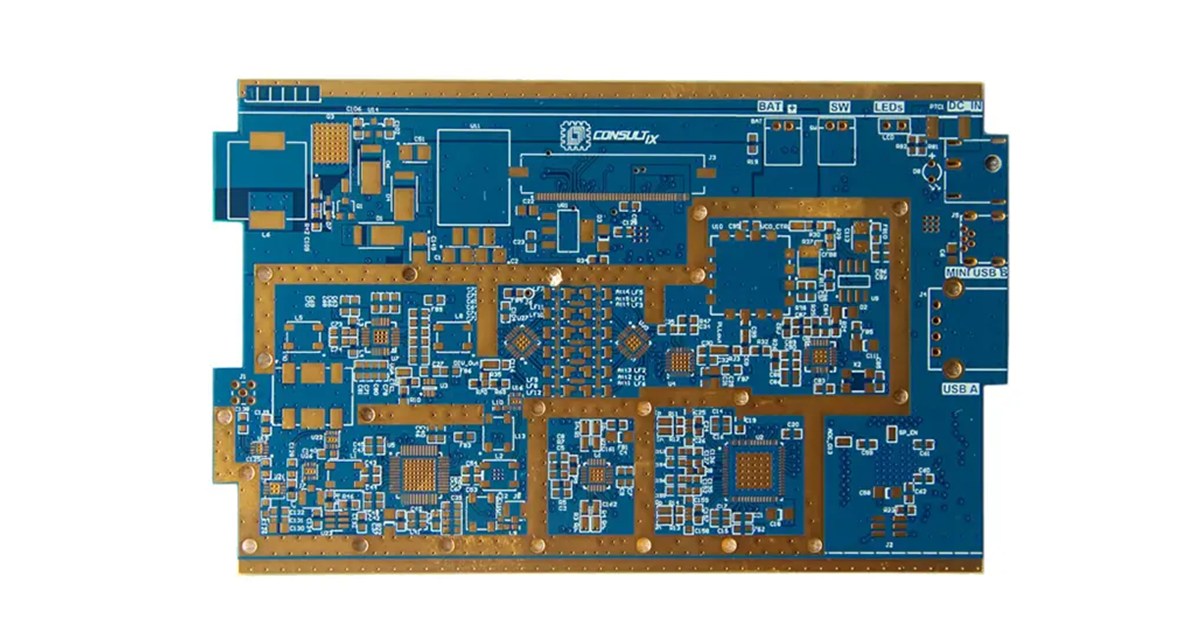
Rogers RO4003C high-frequency circuit boards, as ceramic-filled hydrocarbon resin materials, deliver outstanding performance in 5G base stations and automotive radar applications. When enhanced with ENIG surface treatment, they achieve the perfect balance between performance and cost. Professional high-frequency RF PCB manufacturers should focus on these core characteristics:
Five Key Advantages of ENIG RO4003C HF Boards
Superior Dielectric Stability
Dielectric constant of 3.38±0.05 (@10GHz) with less than 1% variation from -40℃ to +85℃. ENIG enables ±5% impedance control for high-frequency microwave RF PCBs, 30% better than traditional HASL processes.
Excellent Mechanical Strength
Z-axis CTE of just 46ppm/℃ combined with ENIG’s 280℃ reflow resistance solves warpage issues in multilayer HF boards – a critical quality control point for high-frequency PCB factories.
Enhanced Environmental Resistance
ENIG passes 96-hour 85℃/85%RH testing, providing 10× better oxidation resistance than OSP. Gold thickness of 0.05-0.15μm ensures reliability for automotive radar in humid conditions.
Cost-Effective Signal Transmission
3.3W/m/K thermal conductivity with ENIG:
- Reduces 28GHz transmission loss by 18%
- Improves heat dissipation by 25%
- Exceeds IPC-6012 solder joint strength by 20%
Fast Turnaround Advantage
RO4003C’s FR-4 compatible processing allows high-frequency RF PCB manufacturers to:
- Reduce prototyping to 3 days
- Cut mass production lead time by 40% vs PTFE substrates
Manufacturer Qualification Standards
Choose certified high-frequency PCB factories with:
✅ Rogers Tier 1 distributor certification
✅ ENIG process CPK≥1.33
✅ Microwave anechoic chamber testing
Typical Applications
5G AAU|77GHz automotive radar|Satellite terminals|Security radar systems
Technical Commitments
▪️ ±5% impedance control ▫️ 72-hour prototyping ▪️ Free 3D structure simulation