
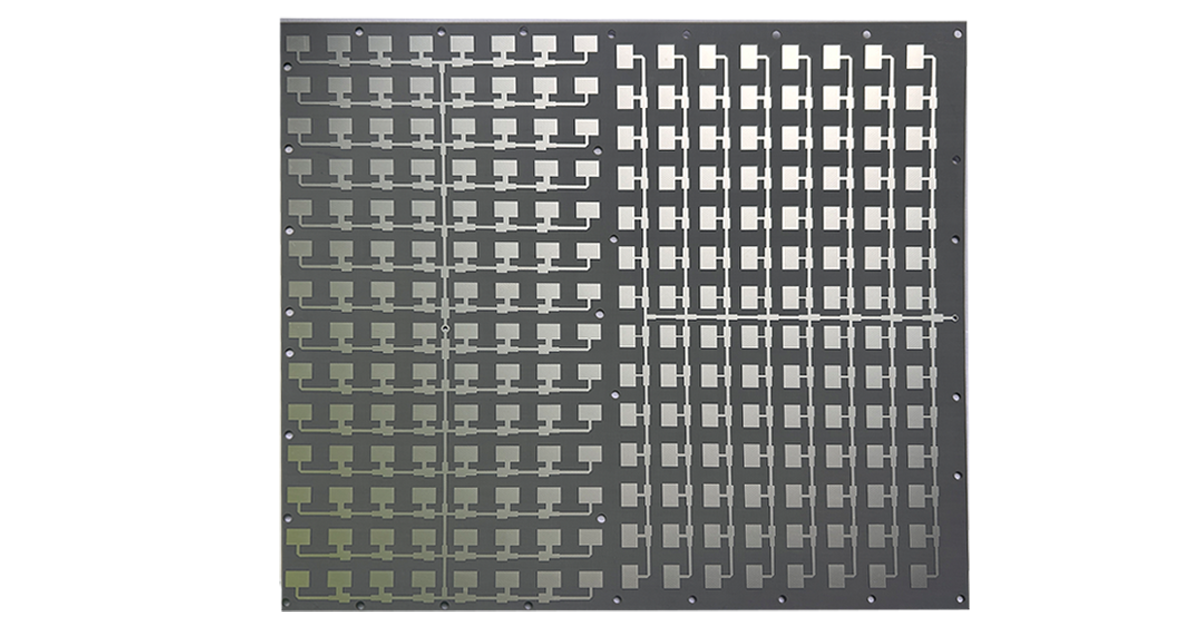
The State of China’s High-Frequency PCB Materials
In 5G infrastructure, satellite navigation, and radar systems, Rogers’ high-frequency laminates have long dominated the market. While Chinese manufacturers are making strides, key technical challenges remain before full substitution is possible. This analysis examines the performance gaps and domestic innovation pathways.
Technical Bottlenecks of Chinese HF Materials
1. Dielectric Stability Issues
| Parameter | Rogers RO4000™ | Domestic Equivalent |
|---|---|---|
| Dk Variation @10GHz | ±0.05 | ±0.1+ |
| 85°C/85%RH Test | <0.02 Dk shift | 0.05-0.08 Dk shift |
Impact: Causes ±3% impedance drift in mmWave circuits
2. Higher Dissipation Factor
- Domestic PTFE: Df 0.002-0.003
- Rogers RT/duroid®: Df ≤0.001
Result: 15-20% higher insertion loss at 28GHz
3. Multilayer Limitations
- Max Layers: 20 vs. 40 for Rogers
- Thickness Variation: 5% vs. <3%
- Void Content: 1.5% vs. 0.5%
3 Key Breakthrough Pathways
1. Ceramic Hybrid Technology
- Nano-Al₂O₃/SiO₂ Composites
- SYT-55 Material:
✓ Dk stability ±0.08
✓ Huawei 5G base station verified
2. Advanced Copper Foils
| Foil Type | Roughness (Rz) | Skin Effect Loss @28GHz |
|---|---|---|
| Standard | 3μm | 0.8dB/cm |
| RTF | 1.2μm | 0.5dB/cm |
3. Specialty Resin Development
- CAS Cyanate/Benzoxazine Copolymer:
✓ Df 0.0015
✓ Tg 280°C
✓ Comparable to RO4835™
Substitution Roadmap by Frequency Band
Sub-6GHz Applications
✅ Mature Replacement
- Used in:
✓ 5G AAU (e.g., Shengyi SYT-55)
✓ Base station antennas
mmWave (24-77GHz)
⚠ Partial Replacement
- Guocera’s Si₃N₄ substrates in sampling
- Still require imported materials for:
✓ Phase array antennas
✓ Satellite payloads
Aerospace & Defense
❌ Import-Dependent
- 90% Rogers market share
- Pending certifications:
✓ MIL-PRF-55110
✓ ESA ECSS-Q-ST-70-60
Industry Outlook: 3-5 Year Projection
Consumer Electronics
- Full substitution expected
- Driven by cost (30-50% savings)
Automotive Radar
- Domestic ultra-low loss materials in use
- 77GHz solutions nearing qualification
High-End Applications
- Requires breakthroughs in:
✓ Material purity (≤ppb metals)
✓ Laser ablation precision (±5μm)