
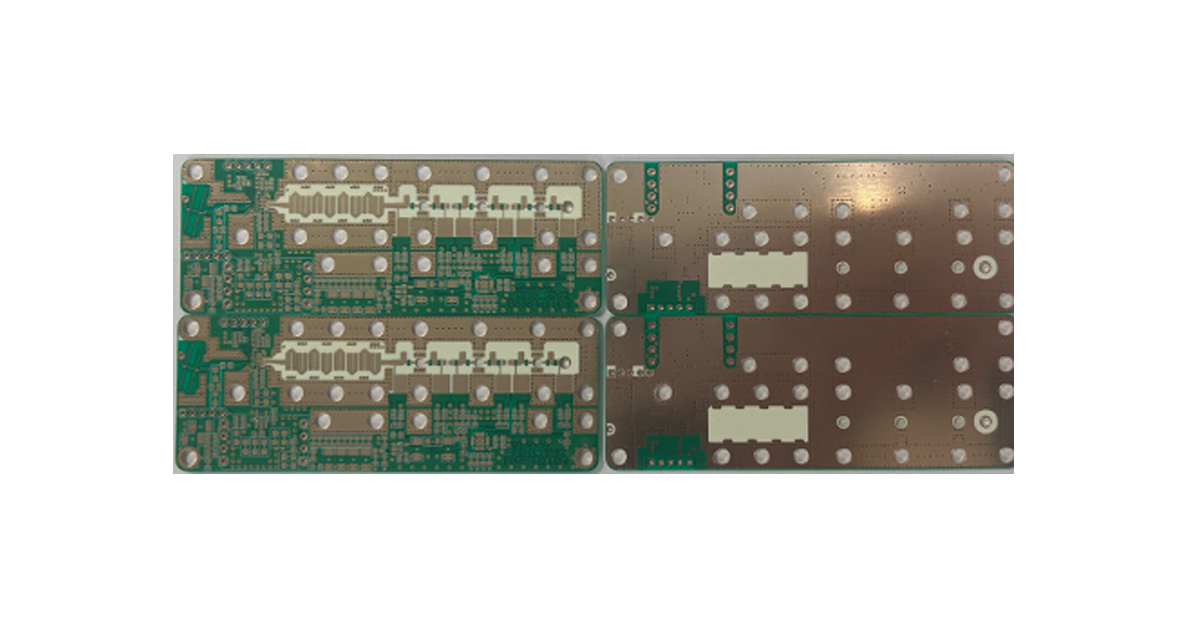
Rogers 4003C is a high-frequency circuit laminate developed by Rogers Corporation, widely used in RF and microwave applications due to its stable dielectric properties, excellent mechanical strength, and strong thermal stability. Below is an analysis of its key characteristics and application areas.
1. Key Properties of Rogers 4003C
- Superior Dielectric Performance
Rogers 4003C has a stable dielectric constant (Dk) of 3.38±0.05 (@10GHz) and a low dissipation factor (Df) of 0.0027, ensuring minimal signal loss and enhanced signal integrity in high-frequency circuits. - Excellent Thermal Stability
The material’s coefficient of thermal expansion (CTE) closely matches that of copper, providing dimensional stability under high-temperature conditions, making it suitable for high-power applications. - Reliable Mechanical Properties
With high rigidity and good flexural strength, 4003C is ideal for multilayer PCB fabrication. It also exhibits strong chemical resistance, adapting well to various processing environments. - Strong Environmental Adaptability
The laminate meets UL 94 V-0 flammability standards and demonstrates excellent moisture resistance, ensuring long-term reliability in harsh conditions.
2. Application Areas of Rogers 4003C
- Telecommunications
Used in 5G base stations, millimeter-wave radar, and satellite communication systems, where low-loss signal transmission is critical. - Automotive Electronics
Ideal for automotive radar (e.g., 77GHz mmWave radar) and advanced driver-assistance systems (ADAS), thanks to its stable Dk and low signal attenuation. - Aerospace & Defense
Applied in avionics, missile guidance systems, and radar technologies, where high thermal stability and signal reliability are essential. - Medical Electronics
Suitable for high-frequency medical devices (e.g., MRI RF components) due to its biocompatibility and signal fidelity. - Consumer Electronics
Used in high-end routers and IoT devices to optimize high-frequency signal processing.
Conclusion
Rogers 4003C is a preferred material for high-frequency circuit design, offering a balance of performance and reliability. With advancements in 5G, autonomous vehicles, and IoT, its applications are expected to expand further.